TFI PEDAGOGY
Integral Formation Triangle
Identity Statement:
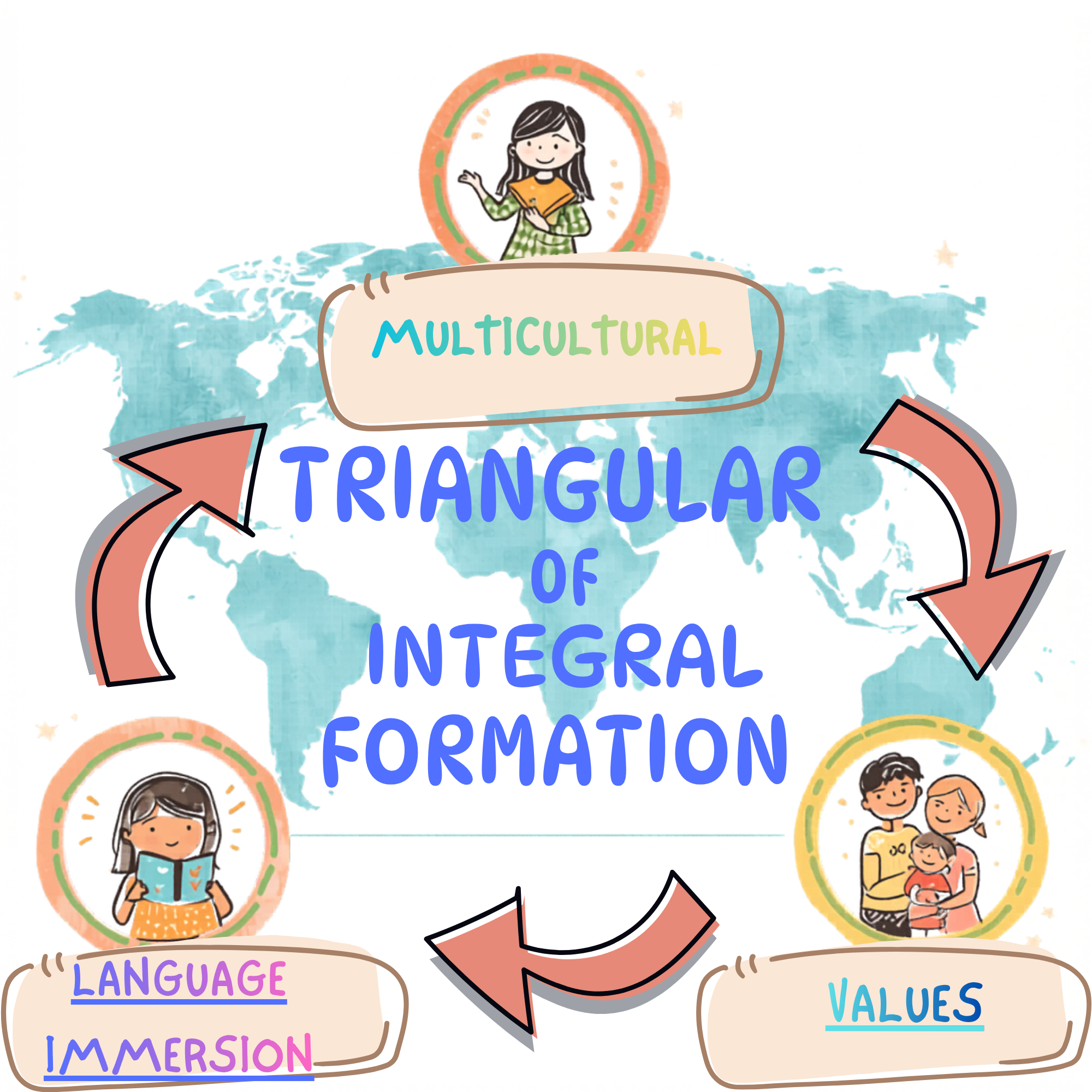
The Integral Formation Triangle (TFI) is an early childhood pedagogical framework that intentionally integrates three fundamental pillars of child development:
The development of bilingual language: 100% immersion where the language serves as the vehicle for discovering the world.
Strengthening the child's connection to their roots: Connecting them to their origin while simultaneously opening windows to other cultures. This is the pillar of self-esteem and emotional security.
Character and values formation: Our priority is to raise "better human beings and create a better world." We foster independence from an early age as the foundation of self-confidence.
These three pillars articulate an educational model that aims to develop children with solid language skills, a clear sense of cultural belonging, and a firm ethical foundation for their personal and social development.
I. The Three Methodological Pillars (TFI Pillars)
1. Linguistic Pillar: Language Immersion
The Method: A 100% language immersion model is implemented through play, social interaction, and meaningful daily experiences. This approach fosters language development and stimulates brain growth by consistently and naturally exposing the child to the language.
Integration of Language and Values: By learning the language in an environment guided by values, the child simultaneously develops communication skills and positive ways of living together. In this manner, language learning and ethical formation mutually reinforce each other.
Neuroscientific Approach:
"The simultaneous teaching of a second language and a universal values framework generates a neurocognitive anchor in the child. By intertwining the linguistic code with daily ethical practice, the child’s brain develops integrated neural circuits, where language mastery and positive behavioral patterns consolidate in a unified and natural way."
2. Ontological Pillar: Roots and Multiculturalism
The Method: This pillar helps the child recognize their family history, identity, and sense of belonging. At the same time, it allows them to approach other cultures with curiosity, respect, and openness.
Emotional Foundation: It strengthens self-esteem, emotional security, and self-worth—essential elements for the child to learn and socialize with confidence.
Connecting and Celebrating: Connecting the child with their origin while opening windows to other cultures. We integrate holidays, music, and traditions from different cultures, teaching that differences are not only respected but celebrated.
3. Axiological Pillar: Character Education / Values Formation
The Method: This pillar turns every moment of the day into an opportunity to teach and practice values. Through play, routines, and daily interactions, the child learns to act with respect, honesty, gratitude, and responsibility.
Character Formation: The language used daily at the centre helps name, reinforce, and model positive behaviors. In this way, values cease to be abstract ideas and become habits that strengthen the child’s moral identity